
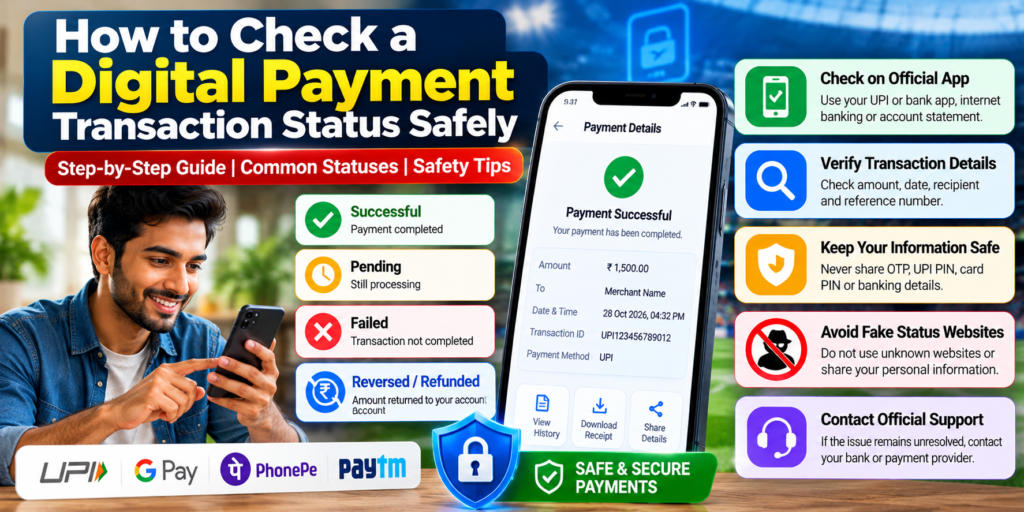
Digital payments can sometimes display statuses such as successful, pending, failed, reversed, or refunded. Understanding these statuses is important because the appropriate next step depends on what happened to the transaction.
If you need to check a payment transaction status, always use your official bank or payment application rather than relying on messages or unfamiliar websites. You can also visit the Cricbet99 website for general website information, but use your bank or payment provider to verify actual financial transactions.
Why Should You Check Transaction Status?
A payment may appear unsuccessful on one screen while it is still being processed by the bank or payment network. Checking the official transaction history helps you determine whether the payment was completed, remains pending, or requires further investigation.
This is particularly important before attempting another payment, as repeating a transaction without checking the original status could result in an unintended duplicate payment.
Where Can You Check the Payment Status?
The safest place to start is the official UPI or payment application used for the transaction. You can also check your bank’s official mobile application, internet banking service, or account statement.
Follow these general steps:
- Open the official payment or banking application.
- Navigate to transaction history or payment activity.
- Locate the transaction using its date and amount.
- Review the displayed status and transaction details.
- Contact your bank or payment provider through a verified support channel if the result is unclear.
For general online account information, you can also refer to the Cricbet99 website. However, financial transaction details should always be confirmed directly through the relevant payment provider.
Common Digital Payment Statuses Explained
1. Successful
A successful status generally means the transaction has been completed according to the payment system. Check the recipient details and account statement to confirm that the payment information matches your records.
2. Pending
A pending status means the transaction has not yet reached a final outcome. It may still be processing through the bank or payment network.
Avoid immediately repeating a pending transaction. Check the status again after the period specified by your payment provider.
3. Failed
A failed status generally indicates that the transaction was not completed successfully. However, check your account statement to determine whether any amount was debited and whether further action is necessary.
4. Reversed or Refunded
A reversed or refunded status generally indicates that money associated with a transaction has been returned or is being returned through the relevant payment process.
The exact terminology and processing time can vary between banks and payment providers. Check the transaction history for confirmation.
Check the Amount, Date, and Reference Number
When reviewing a transaction, verify the amount, date, recipient information, and available transaction reference number.
These details help distinguish one payment from another, especially when several transactions were made around the same time.
Keep the reference number available if you need to report a payment issue. Share it only with the relevant bank or legitimate payment provider when necessary, and avoid posting transaction details publicly.
Be Careful With Fake Payment-Status Websites
Fraudulent websites and impersonators may claim to check transaction statuses, release pending payments, or process refunds.
Never enter your UPI PIN, OTP, banking password, card PIN, or CVV on an unfamiliar website. A person claiming to provide payment assistance should not ask you to disclose confidential authentication credentials.
Always use official banking applications and verified support channels. Be especially cautious of unsolicited messages promising instant refunds or demanding a fee to release money.
What If a Payment Remains Pending or Fails?
If a transaction remains pending, check the status again and review your account statement before taking further action.
If money was debited but the transaction appears failed, keep the reference number and contact your bank or payment provider through its official complaint process. Ask about the transaction’s status and any applicable reversal procedure.
Avoid making another payment until you understand what happened to the original transaction.
Frequently Asked Questions
1. How do I check a payment transaction status?
Use the official UPI or payment application, bank application, internet banking service, or account statement associated with the transaction.
2. What does pending mean?
Pending means the transaction has not yet reached a final status. It may still be processing.
3. Should I repeat a pending transaction?
Avoid repeating it immediately. Check the original transaction’s status and follow your payment provider’s guidance first.
4. What does a successful payment status mean?
It generally indicates that the transaction has been completed according to the payment system. Check the transaction details and account statement for confirmation.
5. What does a reversed transaction mean?
A reversal generally means the transaction amount has been returned or is being returned through the payment system’s process.
6. Can I check payment status through an unknown website?
Avoid unknown websites. Use official banking applications and verified payment-provider channels.
7. Should I share my OTP to confirm transaction status?
No. Keep OTPs confidential and enter them only through a legitimate verification process when appropriate.
8. What information should I keep when reporting a payment problem?
Keep the transaction date, amount, displayed status, and reference number available. Share relevant information only with the legitimate bank or payment provider.